


SCOTUS ruling on TPS will lead to deportation of Haitians and Syrians | The Excerpt
SCOTUS ruling on TPS will lead to deportation of Haitians and Syrians | The Excerpt

Dana Taylor, USA TODAYFri, June 26, 2026 at 9:09 AM UTC
1
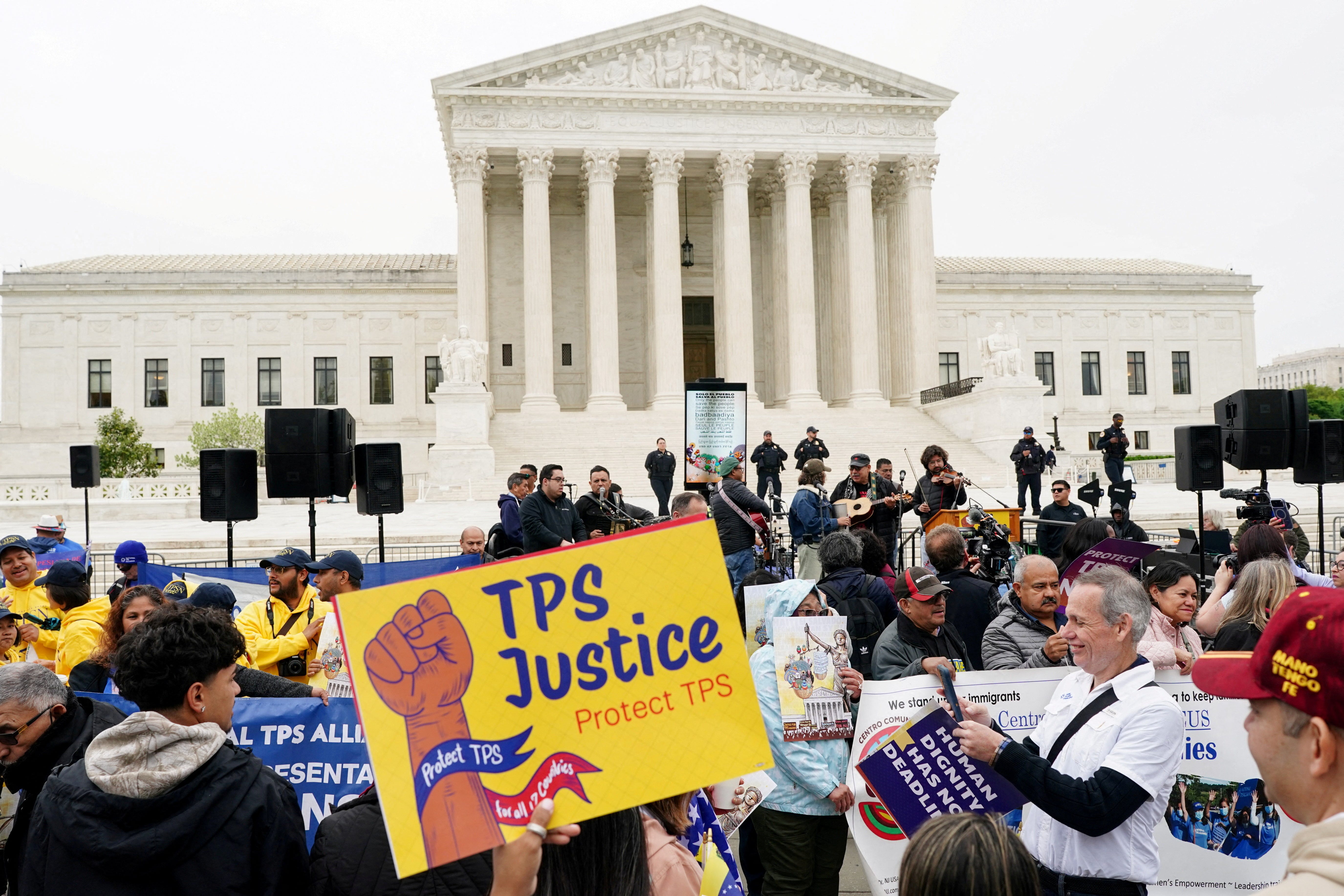
On the Friday, June 26, 2026, episode of The Excerpt podcast: The Supreme Court has ended a humanitarian program that let many Haitian and Syrian immigrants stay in the U.S. temporarily, giving President Donald Trump a major immigration win and leaving affected families facing an uncertain future. USA TODAY Supreme Court Correspondent Maureen Groppe joins The Excerpt to explain what this decision means now.
Hit play on the player below to hear the podcast and follow along with the transcript beneath it. This transcript was automatically generated, and then edited for clarity in its current form. There may be some differences between the audio and the text.
Podcasts: True crime, in-depth interviews and more USA TODAY podcasts right here
Dana Taylor:
The Supreme Court on Thursday issued a ruling that will affect the lives of hundreds of thousands of Haitian and Syrian immigrants and the communities where they live and work, effectively ending a humanitarian program that allowed them to stay in the United States temporarily while handing President Donald Trump a major win on his hard-line immigration stance.
So what happens now?
Hello and welcome to USA TODAY's The Excerpt. I'm Dana Taylor. Today is Friday, June 26th, 2026.
Joining me to talk through this major decision for the high court's term is USA TODAY's Supreme Court correspondent, Maureen Groppe. Maureen, it's always good to have you on the show.
Maureen Groppe:
Thanks for having me on.
Dana Taylor:
Maureen, start us off by setting the stage for this very impactful decision. What's the program they're referring to? How many people are here because of it and how long have they been here?
Maureen Groppe:
The program we're talking about is called Temporary Protected Status. It's often referred to by shorthand of TPS and it's a program that Congress created in 1990.
This is a program that allows people who are in the United States to live and work here legally if the conditions in their home country are deemed too dangerous for them to return to. And countries can be designated in this program at different times.
The two countries we were talking about here in this decision are Haiti and Syria. Haiti was first designated as too dangerous in 2010 because of a devastating earthquake there. And there are about 350,000 migrants from Haiti who are in the country right now who have this protected status. For Syria, people from that country were first eligible for this protection in 2012. And in that case, we're talking about 6,000 migrants who had been protected under this program.
But this decision is likely to reach beyond that. This sets a precedent for the administration to end this program for people from other countries. And in total, there are about 1.3 million people who have been benefiting from this humanitarian program.
Dana Taylor:
So it's a lot of immigrants we're talking about and a lot of jobs because TPS allows this cohort of people to legally work here in the United States. Maureen, what happens next to these people logistically? Is there an appeals process before anyone has to leave?
Maureen Groppe:
So these people will lose their protected status. If they don't have another lawful basis to remain in the US, then the Department of Homeland Security may begin enforcement actions. And the timing of when or whether they do so, that depends on the department's priorities.
The people who already have been given final orders of removal, those are the ones who are most vulnerable to being deported. So we could see an increase in arrests and detentions for those folks.
If someone does not have a final order of removal, then there's a removal proceedings process and that starts with them being issued a notice to appear before an immigration judge. And at that point they could try to seek some other type of protection such as through an asylum claim.
Dana Taylor:
The vast majority, 70% of Haitian immigrants in the US are working. That's according to the Migration Policy Institute, an independent nonpartisan and nonprofit think tank.
MPI reports that as of 2021, over 100,000 of them were employed in healthcare, mostly in support occupations such as nursing assistants, personal care aids, and home health aids. These are typically low-wage jobs that the healthcare industry writ large has had a tough time recruiting for since the pandemic. What happens to those nursing care homes and hospitals?
Maureen Groppe:
Well, they've said a lot of those homes, they're positions that are hard to fill, and this is going to make it even harder. So in fact, we saw groups representing those industries and other industries file briefs with the Supreme Court when this case was being argued, pointing out that fact. And we also saw Ohio's Governor Mike DeWine, who's a Republican. We've seen him speaking out about the contributions through work and otherwise that Haitians who are living in Ohio have made to that state.
Dana Taylor:
How unusual is this decision for the TPS program? Has a president or a Homeland Security secretary ever abruptly ended TPS before?
Maureen Groppe:
What Trump is doing is unusual. This was not the first time he tried this with the Haitians and Syrians. He did it, also ended protections for Venezuelans in the country. And the Supreme Court, in that case, also said he could go ahead and end the protections while the Venezuelans were challenging whether that had been done legally. So this time though, instead of making that decision in an emergency order, a brief order, as the court did with the Venezuelans, they held oral arguments and wrote a more lengthy opinion explaining their decision in the case of the Haitians and Syrians.
Dana Taylor:
Are there any other nationalities who might soon be stripped of their TPS status?
Advertisement
Maureen Groppe:
Well, since Trump returned to office, his administration has moved to end protections for immigrants for the vast majority of the 17 countries that earlier administrations declared unsafe. We have a few more renewal deadlines that will be triggered in the coming months, and that includes Ukraine. So we'll see what the Trump administration does in those situations.
Dana Taylor:
As you've written, many of the people who are here for humanitarian reasons, what kind of circumstances will they face if they're forced to return home?
Maureen Groppe:
The State Department has issued the strongest level of warnings that they put out about traveling to both Syria and Haiti because of unsafe conditions in those countries. So for example, the risks in Haiti include civil unrest, limited healthcare, crime, terrorism, and the risk of kidnapping. And the government says if you do go to Haiti, they encourage you to leave DNA samples with a doctor or your dental records with a family member, in case that those records are needed to identify your remains.
Dana Taylor:
And what are you hearing from organizations who are fighting to keep these programs intact?
Maureen Groppe:
Well, one of the arguments that the lawyers for the Haitians made was that the decision to end the protections for this group was racially motivated. Trump has repeatedly maligned Haitian immigrants, including falsely accusing the Haitians who are living in Ohio of eating people's pets. They're eating the dogs or eating the cats. You might remember that line from the 2024 campaign. And during that campaign, he promised large deportations in Springfield, Ohio, where many Haitians live.
In Thursday's decision, Justice Alito though, he said none of Trump's comments were overtly racial. And in substance, they all expressed policy views that could rest on race-neutral justifications. He did say that the political discourse by prominent public figures is increasingly couched in terms that would've scandalized the public just a short time ago, but he said that's not enough to say that the Trump administration's motivation was racially motivated and so should be stopped.
Justice Elena Kagan, in her dissent, she said that the comments from the president are so repellent and racially inflected that Alito declined to put them in the majority opinion that he wrote. So she, in her dissent, she made sure to include them.
Dana Taylor:
Maureen, as I mentioned, this ruling represents a major win for the president and his administration. What was their argument for ending the TPS status for Haitians and Syrians?
Maureen Groppe:
Their main argument was that the law creating this program bars judges from reviewing any part of the government's decision-making process. The lawyers for the immigrants said that the law doesn't bar judges from reviewing whether the proper decision-making process was followed. If the process was followed correctly, then they agreed that judges can't second guess that decision, but they said courts can still look at whether in fact the process was followed. The process that the law lays out. And they said that didn't happen in this case, that the Homeland Security Department failed to properly consult with the State Department about the conditions in Syria and Haiti, and they reached a predetermined conclusion in order to end the protections.
Dana Taylor:
There's another big anti-immigration ruling coming before the Supreme Court's term ends next week and that's birthright citizenship. Tell us about that case.
Maureen Groppe:
So that's a challenge to the executive order that the president issued his first day back in office that limits what's known as birthright citizenship, the guarantee in the constitution that if you are born in the United States then you are automatically a citizen. And he has argued that should not apply to people whose parents are in the country illegally or temporarily, such as they're a tourist or they're here on a student visa or on a work visa. He said it should only apply to people who are legally and permanently in the United States.
Dana Taylor:
Maureen, does this ruling foretell which way the high court might rule on that?
Maureen Groppe:
No, it doesn't because the legal issues involved are very different. In the Temporary Protected Status case, the legal issue there was how to interpret the law that created that program, and with also the side issue of whether racial animus was involved. In the birthright citizenship decision, what the justices are looking at is the language of the Constitutional Amendment creating birthright citizenship, how it's been interpreted, and including a law that codified that amendment. So they're very different legal issues and we could get different outcomes.
Dana Taylor:
Maureen, what's your biggest takeaway on this ruling?
Maureen Groppe:
Well, I think this is a substantial win for President Trump and it comes before what people think will be a big loss on birthright citizenship. Both are major parts of the president's hard-line approach to immigration, so he'll be happy with this decision, and we'll have to see whether or not he's happy with what the court decides on birthright citizenship.
Dana Taylor:
Maureen Groppe is USA TODAY's Supreme Court correspondent. Maureen, thank you so much for carving out time. I know it's been a busy week.
Maureen Groppe:
Well, thanks for having me on.
Dana Taylor:
Thanks for listening to USA TODAY's The Excerpt. I'm Dana Taylor. Make The Excerpt part of your weekday routine. New episodes are available every weekday morning.
This article originally appeared on USA TODAY: The Supreme Court just handed Trump a big win on immigration | The Excerpt
Source: “AOL Breaking”
